Welcome to the Mathematical World!
Paul Dirac
Pioneer of Quantum Mechanics and Quantum Field Theory
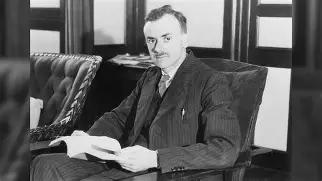
Paul Adrien Maurice Dirac (1902–1984) was an English theoretical physicist and mathematician, renowned for his profound contributions to quantum mechanics, quantum electrodynamics, and the prediction of antimatter. Born in Bristol, England, Dirac combined exceptional mathematical talent with deep physical insight to advance the foundations of modern physics.
Early Life and Education
Dirac showed an early aptitude for mathematics and physics. He studied electrical engineering at the University of Bristol before transitioning to mathematics at the University of Cambridge. By his early twenties, Dirac had already begun formulating the theoretical underpinnings of quantum mechanics.
Dirac Equation and Antimatter
In 1928, Dirac formulated the Dirac equation to describe relativistic electrons, combining quantum mechanics with special relativity:
\[ (i \hbar \gamma^\mu \partial_\mu - mc) \psi = 0 \]Here, \( \psi \) is the wavefunction (spinor) of the electron, \( m \) is its mass, \( c \) is the speed of light, \( \hbar \) is the reduced Planck constant, and \( \gamma^\mu \) are the Dirac gamma matrices.
This equation not only explained the electron’s intrinsic spin but also predicted the existence of antimatter — specifically, the positron — which was experimentally discovered a few years later, confirming Dirac’s theoretical prediction.
Contributions to Quantum Mechanics and Quantum Field Theory
Dirac made numerous contributions, including:
- Development of quantum field theory and second quantization
- Dirac delta function for generalized functions in physics and mathematics
- Foundational work on the principles of quantum electrodynamics
- Introducing the concept of magnetic monopoles in theoretical physics
Mathematical Elegance and Philosophy
Dirac was known for his insistence on mathematical beauty and simplicity in physical laws. He believed that equations should be aesthetically pleasing and logically consistent, often leading him to discoveries ahead of experimental confirmation. His style influenced generations of theoretical physicists, including Richard Feynman and Murray Gell-Mann.
Legacy
Paul Dirac was awarded the Nobel Prize in Physics in 1933, shared with Erwin Schrödinger, for the discovery of new productive forms of atomic theory. His work laid the foundation for modern particle physics, quantum mechanics, and the understanding of antimatter. Today, Dirac is remembered not only for his groundbreaking equations but also for his profound insight into the deep mathematical structure of the universe.

All rights reserved by the Mathematical Unity
Contact: +8801400044645
Email: mathematicalhorse1453@gmail.com
Our Discord Server: Mathematical Unity [Ulus Riyadiyat]